Download SAP Certified Associate-SAP S-4HANA Cloud Private Edition-Extended Warehouse Management.C_S4EWM_2023.Pass4Success.2026-10-06.39q.vcex
| Vendor: | SAP |
| Exam Code: | C_S4EWM_2023 |
| Exam Name: | SAP Certified Associate-SAP S-4HANA Cloud Private Edition-Extended Warehouse Management |
| Date: | Oct 06, 2026 |
| File Size: | 186 KB |
How to open VCEX files?
Files with VCEX extension can be opened by ProfExam Simulator.
Discount: 20%

Demo Questions
Question 1
What do you control with the business context for an exception code?
- The work environment in which you can use the exception code
- The process that can use the exception code
- The internal exception code that is assigned to it
- The possible workflows that can be triggered
Correct answer: B
Explanation:
Comprehensive and Detailed In-Depth Explanation:The business context in SAP EWM exception handling defines the scope of an exception code's applicability. Option B ('The process that can use the exception code') is correct because it specifies the process (e.g., picking, putaway) where the code can be applied, configured in SPRO: SCM Extended Warehouse Management > Cross-Process Settings > Exception Handling > Define Business Context. Option A (work environment) is too vague, option C (internal code) is a mapping detail, and option D (workflows) is a follow-on action, not the context itself.
Question 2
Your customer wants to implement the material flow system (MFS) to control conveyors and the automated high rack storage area. Which standard options do you have to communicate with the programmable logic controllers (PLC)? Note: There are 2 correct answers to this question.
- Use the ALE interface to send an IDoc to a 3rd party software
- Directly integrate to the PLC using ABAP Push Channels
- Send an IDoc through a Post Processing Framework action to the PLC
- Use an RFC adaptor (e.g., SAP Plant Connectivity)
Correct answer: A, D
Question 3
What is the purpose of the custodian in the warehouse setup?
- The custodian is used for the determination of the putaway strategy
- The custodian replaces the previously used Supply Chain Unit
- The custodian processes stock without transfer of title
- The custodian has the legal possession of the stock
Correct answer: C
Explanation:
Comprehensive and Detailed In-Depth Explanation:The custodian in SAP EWM manages stock ownership without title transfer, often in consignment scenarios. Option C ('The custodian processes stock without transfer of title') is correct, as defined in the stock attributes and configured in SPRO: SCM Extended Warehouse Management > Master Data > Define Custodian. Options A (putaway strategy), B (Supply Chain Unit), and D (legal possession) are incorrect as they misalign with the custodian's role, which is operational rather than strategic or legal.
Question 4
How are warehouse orders sorted for automatic assignment to a resource? Note: There are 2 correct answers to this question.
- By latest starting date
- By resource utilization
- By mode
- By execution priority
Correct answer: A, D
Explanation:
Comprehensive and Detailed In-Depth Explanation:Warehouse order sorting for resource assignment in SAP EWM uses priority criteria. Option A ('By latest starting date') is correct as it ensures timely execution, and option D ('By execution priority') is correct because priority levels (e.g., high, low) influence assignment, both set in SPRO: SCM Extended Warehouse Management > Resource Management > Define Sort Rules. Option B (utilization) and option C (mode) are not standard sorting parameters.
Question 5
Which stocks can be displayed in the SAP Extended Warehouse Management warehouse management monitor? Note: There are 2 correct answers to this question.
- Stock in transit
- Stock in transportation units
- Reserved stock
- Stock on resources
Correct answer: B, D
Question 6
To which object do you assign the replenishment method?
- Storage type
- Document category
- Document type
- Warehouse process type
Correct answer: A
Explanation:
Comprehensive and Detailed In-Depth Explanation:Replenishment in SAP EWM moves stock from reserve to picking areas. Option A ('Storage type') is correct because the replenishment method (e.g., automatic, planned) is assigned to a storage type in SPRO: SCM Extended Warehouse Management > Goods Issue Process > Replenishment > Define Replenishment Control per Storage Type. This determines how replenishment is triggered for that area. Options B, C, and D (document-related or process type) are not directly linked to replenishment method assignment.
Question 7
What can be used to specify the storage process? Note: There are 2 correct answers to this question.
- Warehouse process type
- Warehouse order creation rule
- Warehouse storage type
- Activity area
Correct answer: A, B
Question 8
What is the stock in the warehouse assigned to? Note: There are 2 correct answers to this question.
- Resource
- Owner
- Shipping point
- Party entitled to dispose
Correct answer: B, D
Explanation:
Comprehensive and Detailed In-Depth Explanation:Stock in SAP EWM is assigned ownership attributes. Option B ('Owner') is correct as it identifies the stock's legal owner (e.g., company), and option D ('Party entitled to dispose') is correct because it specifies who can manage the stock (e.g., a customer), both maintained in the product master and stock data. Option A (resource) is temporary during handling, and option C (shipping point) is ERP-specific, not EWM stock assignment.
Question 9
You have maintained several process types that should all use the same storage type search sequence for putaway. You want to minimize customizing efforts and create only one entry for these process types. What can you use to achieve this goal?
- Process type group
- Putaway control indicator
- Storage type group
- Stock type group
Correct answer: A
Explanation:
Comprehensive and Detailed In-Depth Explanation:To streamline configuration, SAP EWM allows grouping process types. Option A ('Process type group') is correct because it enables multiple process types to share a single storage type search sequence, defined in SPRO: SCM Extended Warehouse Management > Goods Receipt Process > Define Process Type Group. Options B, C, and D (putaway control indicator, storage type group, stock type group) serve other purposes like putaway rules or stock categorization, not process type grouping for search sequences.
Question 10
Your customer receives batch-relevant material in the warehouse. When do you have to create a batch?
- Before the inbound delivery is distributed from SAP ERP to SAP EWM
- Before the goods receipt is posted in SAP EWM
- Before the warehouse task is created in SAP EWM
- Before the inbound delivery is created in SAP EWM
Correct answer: B
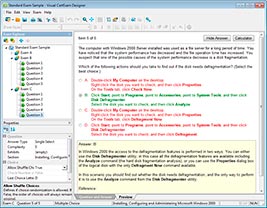
HOW TO OPEN VCE FILES
Use VCE Exam Simulator to open VCE files
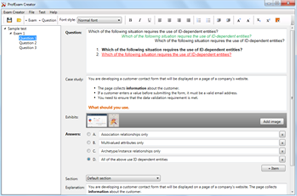
HOW TO OPEN VCEX AND EXAM FILES
Use ProfExam Simulator to open VCEX and EXAM files
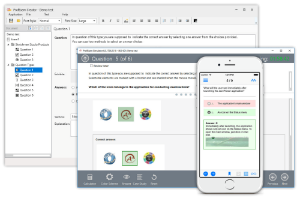
ProfExam at a 20% markdown
You have the opportunity to purchase ProfExam at a 20% reduced price
Get Now!